

09.02.2026
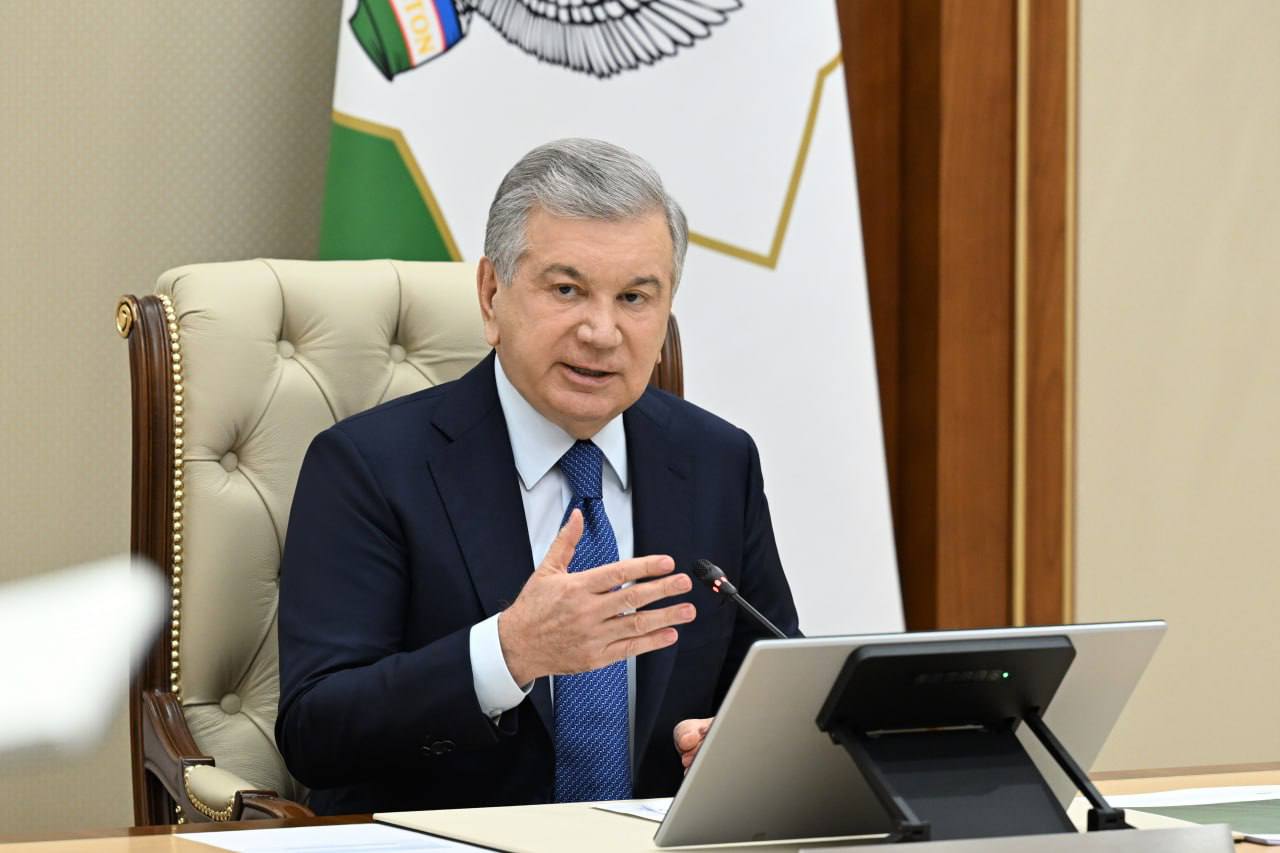
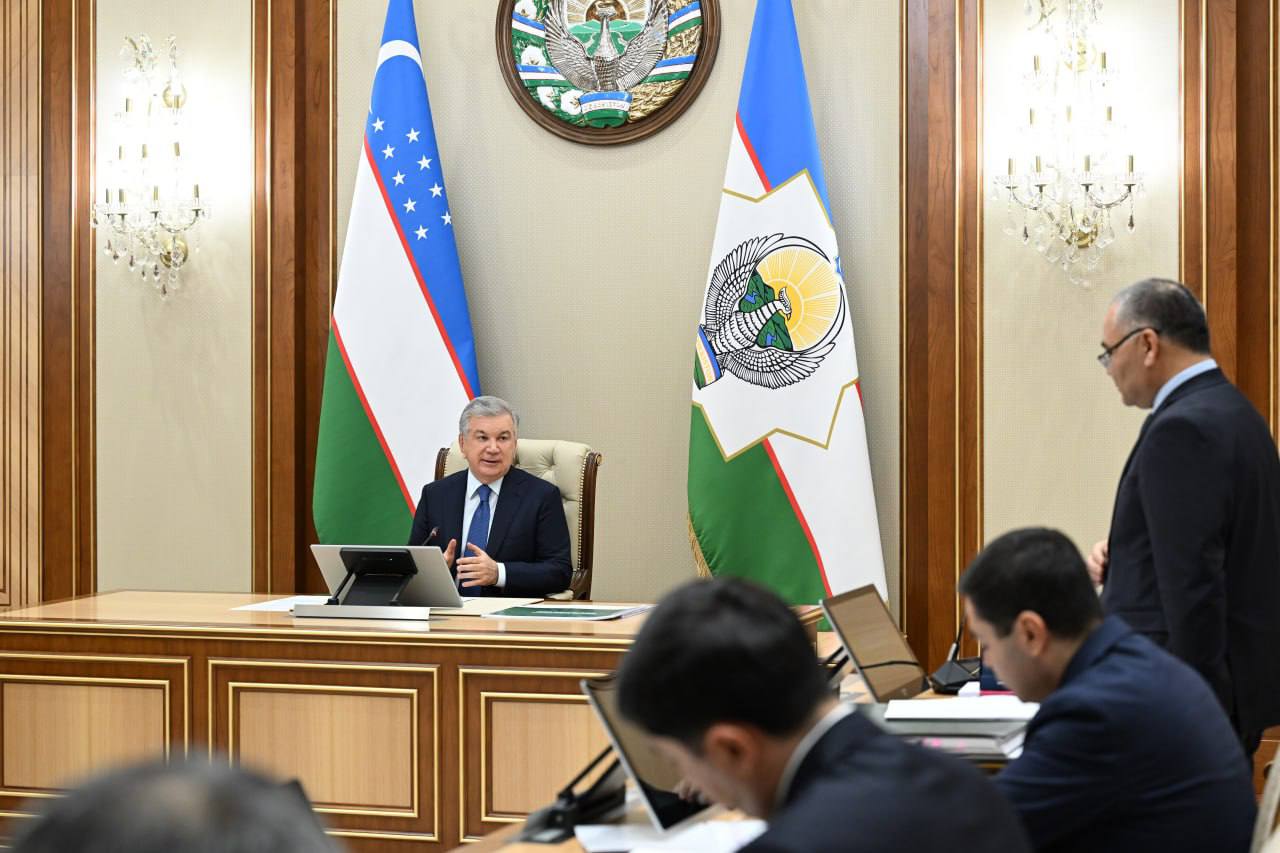
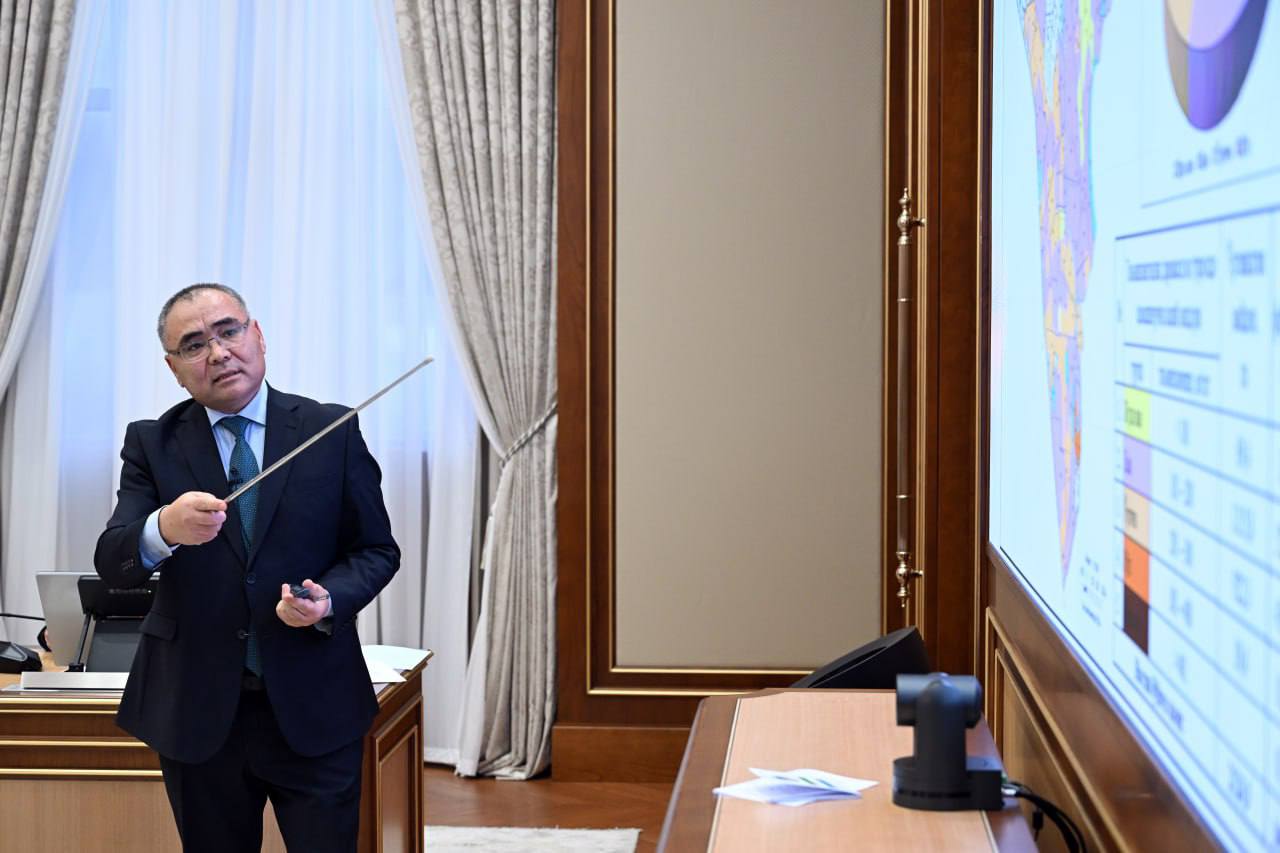
On February 9, President Shavkat Mirziyoyev reviewed a presentation of proposals for developing new lands for agriculture and elevating scientific activities in the sector to a new level.
As a result of irrigation and land reclamation efforts over the past five years, 826.5 thousand hectares of land have been brought into agricultural circulation. Of these, 409 thousand hectares were irrigated lands, while a further 418 thousand hectares were developed through the use of groundwater in rainfed and pasture areas, as well as the cultivation of low-water-consumption crops.
The presentation outlined plans for the development and improvement of another 938 thousand hectares of pastureland by 2030.
For instance, during 2026-2027, it is planned to restore 620 thousand hectares of pastures. In particular, fodder crops will be planted on 300 thousand hectares, and water wells will be installed on 130 thousand hectares. As a result, grazing capacity for 960 thousand head of small livestock will be created, along with increased production of meat and wool.
It was emphasized that the time has come to change the existing institutional infrastructure of agricultural science and elevate it to a new level. To this end, it is planned to merge 22 scientific centers, 260 laboratories, and more than 2,500 scientists and researchers into a single structure, the Academy of Agricultural Sciences.
During the presentation, it was proposed to designate areas such as biotechnology and molecular biology, genetic engineering and hybrid seed production, smart agriculture, space and drone technologies, land degradation and soil health, organic farming and food security, veterinary medicine, and digital agriculture as priorities for the academy's activities.
Measures for the effective organization of the academy's activities were defined.
Particular attention was paid to personnel training for agriculture. It was noted that 13.6 thousand students are currently studying at the Tashkent State Agrarian University, but due to the weak integration of education with practical training, only 55 percent of graduates are employed in their field of specialization.
In this regard, tasks were set to establish a system that organically links education, scientific research, and production, as well as to train qualified specialists who meet the demands of the labor market.
Particularly, in the future, 6.8 thousand university students will undergo practical training at production organizations, enterprises, and agro-clusters, while more than 2.6 thousand will train at 22 research institutes within the Ministry of Agriculture system.
Furthermore, it was proposed to admit children of farmers and their employees who do not achieve the required entrance examination scores on reduced-tuition contracts, and to shorten the duration of study in seven educational fields from four years to three years. Students will also be trained to obtain tractor driving licenses and to operate agricultural drones.
The activities of the Agro-Industrial Development Agency were reviewed.
Last year, intensive and industrialized orchards and vineyards were established on 44 thousand hectares of inefficient land, which created 37 thousand jobs.
These orchards and vineyards are expected to begin yielding harvests from 2027, enabling annual exports of fruit and vegetable products worth $660 million. For example, in Sokh, apples, raspberries, and apricots were planted on 500 hectares, in the Termez district, apricots and peaches on 164 hectares, “Avatar” grapes were planted on 309 hectares in the Akhangaran district, 550 hectares in Bulungur, and 60 hectares in Kuva. In the Pap district, peach and plum plantations were established on 504 hectares.
It was noted that as a continuation of this work, it is necessary to create 25.5 thousand hectares of fruit orchards and 5 thousand hectares of vineyards in 2026, and to organize 48 thousand permanent and seasonal jobs.
Each year, saplings worth 60 million dollars are imported into the country. It was noted that the necessary conditions are in place for their local production to European standards.
For this purpose, the agency has created a collection of more than 200 virus-free, high-yielding parent fruit varieties. To propagate saplings of these varieties and ensure their supply to all regions, complexes comprising in vitro laboratories and parent nurseries are being established on 50 hectares in the Bektemir district and 75 hectares in the Yukorichirchiq district. Instructions were given to commission these complexes by the end of the year and ensure the annual production of 27 million saplings.
Following the discussion, the President issued relevant instructions to the responsible officials.


When using materials reference to www.president.uz is required
© 2026 Official web-site of the President of Uzbekistan
All rights reserved
Attention! If you find an error in the text, select it and press Ctrl + Enter to notify the administration
